

The Golden-bellied Mangabey: A Treasure of the Congo Now Better Protected
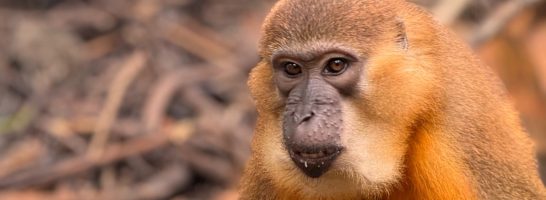
The golden-bellied mangabey (Cercocebus chrysogaster) is now listed among the 25 most endangered primate species in the world, according to the IUCN. Endemic to the Democratic Republic of the Congo, it lives in the swampy and remote forests of the Sankuru region. Despite this isolated habitat, this primate with its golden-colored coat faces threats so severe that its very survival is at stake.
A discreet primate, but critically endangered
The golden-bellied mangabey is threatened by several human pressures:
-
Hunting for bushmeat, which wipes out entire family groups.
-
Illegal wildlife trade, which targets young individuals, often captured after their mothers are killed.
-
Habitat destruction, caused by logging and mining activities.
Together, these factors have led to an alarming decline in the wild population, pushing the species to the brink of extinction.

J.A.C.K.: The rehabilitation center protecting the largest family of golden-bellied mangabeys
Among those who have been working for years to save the species, our rehabilitation center plays a central role. Today, J.A.C.K. cares for the largest family of captive golden-bellied mangabeys in the world, made up of individuals rescued during various seizure operations.
-
A major seizure took place in Zimbabwe, where 11 golden-bellied mangabeys were illegally taken out of the country along with other primates.
-
The other mangabeys were confiscated in the Sankuru region, a true epicenter of wildlife trafficking. These seizures were carried out thanks to the intervention of authorities (Provincial Ministry of the Environment, the Army, and the National Police), and the animals were entrusted to APPACOL-PRN before being transferred to J.A.C.K.
These animals, often deeply traumatized, found at J.A.C.K. a safe haven, proper care, and a chance to rebuild a social life within a natural group.

A personal fight that became an international victory
For the founder of J.A.C.K., having the golden-bellied mangabey listed under Appendix I of CITES represented a major goal. Appendix I is the highest level of international protection, reserved for species threatened with extinction and whose trade is strictly prohibited.
To defend this cause, a collective effort was undertaken with: PRO WILDLIFE, Ed McLester, Héritier MPO (APPACOL-PRN), the LUKURU FOUNDATION, and other experts familiar with the species.
J.A.C.K. and APPACOL-PRN drafted the entire section related to trafficking, documenting in detail the routes, methods, and scale of the illegal trade. For his part, Ed provided in-depth information on the species’ biology and ecology, strengthening the scientific credibility of the file.
The PASA (Pan African Sanctuary Alliance) then submitted the dossier to the ICCN so that it could be officially presented at the CITES meeting.
A historic decision: the golden-bellied mangabey moves from Appendix II to Appendix I
 The proposal was accepted: the golden-bellied mangabey is now officially listed under Appendix I of CITES. This decision marks a crucial turning point for its international protection and acknowledges the severity of the threats facing the species.
For J.A.C.K. and everyone involved in this fight, this victory represents far more than an administrative text: it is the concrete hope of saving a species that, without strengthened protection, could have disappeared in tragic silence.
Once again, heartfelt thanks to all those who took part in this great achievement.